 In northeast New Mexico, as some of you know, there are several old volcano cones, but only one has trees; that is Capulin, which last erupted about 30,000 years ago (if I remember what the video said in the visitors center). For $5 you can drive up around the cone and then follow two or three trails, one that leads into the caldera, long inactive, another around the rim.
The caldera proved to be quite the amphitheater, and I heard a mom down below (unseen here) tell her children that she needed to climb back out because she had to "go potty." Why wait?
The snow on the trees is actually some kind of frost event unique to that elevation and ecosystem; the lichens can be up to 20,000 years old, they say, though I'd never heard of anything living quite that long. Perhaps the writers of such brochures exaggerate. Perhaps only the ancestry extends that far, like everybody else's. I imagine a long line of European immigrants (or their descendants) crossing through the grasslands and hillsides of the Oklahoma and Texas panhandles toward the Southwest and coming across this odd monument with a sort of relief: a sign from God in Heaven and all that, a precursor to the glory of the southern Rockies, a place to hide from savage Injuns still untended to by Washington.
A herd of pronghorn hung out on the boundary as I left, like smokers outside a high-rise. They and the cattle seemed both antagonistic and a bit skittish. Maybe it was the cold.
The ecosystem does its thing. Oh, some buildings burn, a handful, on the dry flora fringes of this concrete scab we call civilization. The nation freaks out, as if this is New Orleans. Do we gym-toned, suntanned "victims" look like we're bloated, floating on our backs in a flood of sewage? You can go back to your regularly scheduled programming. Leave us alone. We'll handle it. We have day laborers out here to push windblown eucalyptus leaves from the sidewalks and gutters and more quasi-documented slaves to detail the ashes off our cars. We're good. Half a million people evacuated doesn't mean they'll scatter far. It just means some temporary camp-outs in the living rooms of friends or family a couple miles down the road. Well-stocked schools and stadiums cover the rest, and no burning embers rain down upon them, just good will, particulate matter and smoke-filtered sunshine. In case you hadn't noticed, and you wouldn't, the real disasters are elsewhere: Darfur and Iraq, the Congo and the Yangzte, not to mention Washington. Yep. No real crisis would get so much attention.
The sky is orange, an apt color for this County of Orange, a place which long ago gave up the historical meaning of its name to suburban development and freeways, tollways, oh, and parkways, on which, coincidentally, you can drive 55. Not so on the 405, ever, and particularly when fire plays tag in the hills, and all the side roads north have closed down to keep lookey-loos (and naughty boys with matches) away from the windswept, combustible pre-developed landscape, staked out; its future high-end, luxury estates still in the planning stages. Not to worry, say the disembodied TV commentators, voices backed by the thrum of helicopters, their faces replaced by God's-eye images of His apocalypse: the fire in Irvine (an enormous swath of land, master-planned) lingers in an area only slated for growth; the flames skim over the top of concrete foundations, but nothing is built there--yet. For now, the natural disaster upstages the human disaster that has ravaged this poor land. None of us will ever live to see the recovery of that. For this landscape and its native ecosystem, this section of California, there is no recovery to come. We have zero containment on sprawl.
 I park, after some hesitation, twenty miles west of that artificial megalopolis, a street hyper-urbanized for its appeal to sin-seeking tourists (and not, as defenders claim, to clean, green living).
It takes me nearly an hour of suburban navigation, red-light, green-light, to get this far, and now a family of Spanish-speaking neocolonialists falls out of a Chevy beside me, with--of all clichés--an unleashed chihuahua and five children similarly free. The parents unload peekneek baskets, and a grandfather, viejo hombre renuente, takes his place in the back of the line, his thick fingers engaged in a tug-o-war with something lodged behind his molars.
So I don't know... I don't know if I want to hang around here, at the end of a week of work away from home. I suffer a particular consternation when faced with large families and the crescendo of their jubilance, their indifference to the public space they occupy. But what choice do I have? This is the option afforded stubborn 21st-century American single men with day jobs. We can't get very far before we have to return, and we are too tired, too cynical, to take this kind of amateur exploration seriously anymore. Small wonder.
The mountains rise high toward the same blue sky that ceilings the Venetian and the new-and-absurd Caesars Palace, Mandalay Bay and Bellagio. These mountains, not supervised by engineers or even built by cheap labor--merely deposited, composited and then revealed, over time, by all the processes that continue on despite everything--will last longer, almost certainly, than that trash heap of metal and sewage down the hill.
I succeed in hightailing it away from our neighbors among us, and I follow a steep embankment equidistant from two rock climbers. They stop to unpack their clanking equipment, and I descend what appears to be the "designated trail" indicated by a small sign placed obscurely on a post beside a stunted Joshua tree. Boot prints seem concurrent, and the scarce vegetation not trampled elsewhere assures me, somewhat, that I won't defy the limited direction implied by fine print: "Area of Ecological Concern."
The east wing of Red Rock Canyon "National Conservation Area" has a name, too, "Calico Hills," and numerous other assignations historically significant to no one in particular--the Paiute and Patayan, the inestimable numbers of wanderers before that--people long dead. Lucky for them, they had the place to themselves and could whoop it up, they could chase around on the rocks and score pictures of fauna and flora into the desert varnish without the consequences of a misdemeanor charge or my irrelevant frown. But the prehistoric marks of man yield less fascination than the geological casualties I find: fallen pieces of uplift collected at the bottom of the cliff like soldiers thrown off a battlement, their contusions caused by eroded iron ore collected within the sandstone.
For at least a mile I wade through this carnage until the "trail" joins up with a dry wash, again designated only by the evidence of other hikers; the brand insignia of their heels in the sand, discarded wrappers, water-bottle caps. Then a stout, sturdy American Pit Bull Terrier, glistening brown, rises up and freezes on the jut of a white boulder ten yards ahead of me. That puts me at a standstill, too, until its owner calls out the beast's name and appears--a young man in camouflage shorts and a tan shirt, dog tags, with a lithe girl who says something; I can't remember the words. They grab hold of their pet's collar and hold it tight to their bare knees, but the animal still growls and barks something unintelligible that echoes like mortar fire; it flings pebbles from the pads of its strong feet and lurches, strains, a muscular mass of fury, made-to-order to mangle passersby.
I ask, "The trail continues on this way?" Internal alarms swirl and sound; external mechanisms remain somehow unresponsive. "Yeah, but you need to know the mountains." I take unexpressed offense at the boy's response, for this isn't his wilderness. To whom does it belong but everyone? Families out for lunch, enthusiasts who cling to the smooth cliff and gingerly hand each other ropes and metal pitons as they raise themselves higher toward the sun, soldiers on leave with their girlfriends, interrupted.
 This place doesn't belong to me, anyway, not in the least. I continue on, and the trail, I think, disappears into a disarray of stones, none of which match, like a drawer full of buttons. I scrabble at my own pace and make it into a ravine of sorts, where I'm sure once or twice a year a good flash flood wells up and pours through like a jungle river. I see evidence of horrific torrents in the twisted cactus roots exposed, the way everything seems upside down and forced against will into an aggregate dump.
For now, all remains still, holds tight and crisp in the autumn heat and waits to see what I will do. The whole Earth waits.
The high-rise shadow of megastructures protects me from the sun in the morning. I think of this as the only advantage to their incredible height and breadth and excess. Every year, four late Septembers in a row, I walk to work on this gaudy, tawdry strip. I dodge tourists with cameras pointed upwards. I wait for the dust behind a bulldozer to settle so I can cross with a crowd at the light. Each time I return, a new stack of several thousand more flights hangs within steel frames, erected by the same handful of developers, paid for by the wide game room at their base and the nickels of seniors, the desperate last bids of the poor, the blank checks of foreign high rollers, the fleeced wallets of the willing, dwindling middle class. And meanwhile, the imploded former icons of garish entertainment augur future projects that make Liberace's coat look like a mud flap.
Yet the people around me disagree in their numbers and in their smiles. They find this place wondrous and exciting, delighted by the giddy thrill of kids at a carnival for adults.
As usual the appeal escapes me. I don't know from popular. I imagine the spectacle of a desert basin left alone, of the green remnant that was "the marshes," "the fertile valley": las vegas, an oasis centered in a wide stretch of baked sand. I live in the wrong time, as the saying goes, but at any other time I would probably be dead. The thing is I live now, not in self-imposed exile but incredulous and pretty much on my own. The billions spent here to erect ever more elaborate houses of cards, expressions of ego and one-upsmanship, could eradicate urban blight, could clothe and house and educate millions, could rebuild Detroit and New Orleans and criss-cross the country with passenger trains, could discover cures or new sources of power, could re-ice the Arctic or figure out a way to replay time so we could witness Rome's ignominy and see in slow-motion the same process of its extremes in full flower here.
As I wander a little on Thursday night on the dark street under the monorail, a skinny fortyish woman in blue jeans and a long-sleeved striped shirt, either a size too large or no longer fitting, stands on the median of Paradise and Sahara. She sees me, her shock of grimy hair caught in the glare of headlights from an SUV, her body backlit by the sheen of the Hilton a couple blocks away. As I pass she raises her cupped hand to her mouth and forms a circle with her fingers, then jerks them quickly back and forth.
"No thanks," would be the answer to the question if she had asked it. I feel the same way about the whole sad, sick, pathological town that stretches out away from us, that hemorrhages, blinking, glittering toward the horizon, far and wide from this wayward and desperate moment.
One forgets or ignores the easy slide of time; like a glacier, it seems so vast and inefficient, but it moves far and fast and does a lot of damage.
A few more rocks have tumbled down the granite walls, and some trees have toppled, split apart, disintegrated both by the crash and the critter aftermath. The wilderness is a majestic place of constant decomposition. It seems timeless, but as I kicked along the trail I viewed the permanence as an illusion, a drawn-out process of constant change. The only reality is change, after all. Isn't that what they say? It is the one thing you can count on and never predict. The Earth is like a perpetual drunk, faltering, reliably inconsistent.
Click here for some photographs if you have time to wait for the flash to download. It's over 5 mb. Such an extravagant waste of unnatural resources.
poor America,
its iconic landscape skin-damaged, scaly, it leans sideways
on its wobbly legs and collapses, heaving,
a sigh of greenhouse gasses,
huddled masses,
on its own, and in its own
way trying to prove an argument
to a world long past that--
one that has seen the beast
and now observes the wooly tufts
of its shedded fur, democracy,
as it settles across the polished globe.
 The weather is the same there as everywhere else, lately, and the lawns have sinned against suburbia by turning yellow. The flowers in the garden struggle despite the hose, and even hornets haven't the energy to sting. Corn stalks remain stunted like withered bamboo bonsai, and the blood-red sun, when it sets, sits huge on the horizon for an hour, as if the earth is so dry it cannot sink.
This frightens deer out of the woods toward the bird bath, and crickets into the house, toads into the garage, all seeking something to drink. The crows battle yellow finches and hummingbirds. 80-year-old red pines rust and die, ever green no longer. Skittish foxes skirt the edge of the field, hoping to spot a cat or a mouse. And the mice, at night, munch on sun-dried husks of frog and beetles, neither of which can outlive these 99-degree days or the shrinking wilderness. So many developments: Meadow Estates. Larson's Landing. Hunter's Ridge. Condos instead of family farms. Freeway bypasses, Super Wal-Marts, and a fine crop of nothing.
But I exaggerate. I took this picture 60 miles north, along the National Scenic Ice Age Trail in Chippewa County. Where nature is left alone, it prospers.
The Arroyo Trabuco is a thin line of wilderness that cuts through the crust of suburbia, as if someone took his fingernail and scored it across a photograph. This deep ravine, often dry, a collected sandy mix of bluffs and sycamores and golden grasses, sends the water, if it rains, toward San Juan Creek, which in turn pours all that it collects into the wide, sad Pacific, the convex blue eyeball of the Earth.
You would never know it was there if you kept your focus on the road; the bridges, dated chronologically as sprawl expands, are anachronistic, modern-day structures that staple one new city to another. And if you look over to the side, you are likely to see a discarded couch, or worse, a bright green manicured golf course.
I know it doesn't matter much to people, that some land owners and stockholders capitulated and left this run-off ditch somewhat wild (actually it is buffered by cosmetically altered manmade marshes and collection tanks, water purification systems and garbage holds, and will never be "real" again). But almost all the land the arroyo served is absent--not gone, but altered with a veneer of plywood, plaster, stucco and asphalt, paint, parking lots, man. This kills all else, it makes the natural channels irrelevant. Why keep a skinny ragged seam of acreage, its tufts of yesteryear sticking out like some embarrassing tear in a brand-new pair of polyester slacks, why remember it, why preserve this strand of obsolete earth? You know why, even as it makes you sad: the land remains to remind you of your crime. You did this by existing.
After a year, thor_progeny web log hasn't caught on, and it has become more of a burden than a privilege or something I enjoy. I write every day, but fiction is easier for me. So thanks for reading, to those who did.
NPR reports that the number of grizzlies in the Yellowstone area has "tripled" since they were placed on the endangered species list (as threatened), but neglects to mention that there are still only 600 of them when it talks of their removal from that maligned roll call of human folly. Time Magazine may place Mother Nature as its "Man of the Year," but not because of its beauty or shredded interconnectedness. Because of bad weather that destroyed some manmade things.
It would be encouraging if people took an interest in their environment, reached out to the world that surrounds them (or once did), but it may be too late. People walk around looking down into their cell phones, punching numbers, seeing if that pic worked, watching tv shows, listening to music instead of birds (instead of traffic); they are focused on the foreground of man and technology, and the intricacies of the wild are left to schoolchildren and field trips, rare geologists and biologists who inevitably schill for corporate donors (or bosses), even against their intentions: "Save this poor acreage here, and you can develop all the rest." The world is not about rare butterflies and snakes; but these are the details that in concert create a vivid orchestra; we are down to solos and not even complete sonatas, now...down to measures, notes, and one day, silence.
Quiet photographs of Yellowstone National Park in October. What's left. 
 Congress has once more scrapped "plans" to drill in the Arctic National Wildlife Refuge. It's the standard shampoo drill: Wait three months, propose ANWR exploration again, sneak it into some unrelated bill, raise hell to defeat it, repeat.
When the whole continent looked like this, before the attack of progress and colonialism and then of mass production, it seemed endless and immutable. Traveling this far took months or more, and by the time you got there, you had to go back or freeze your tuckus. And a lot of proponents of extracting the miniscule amount of petroleum under the ground use the area's remoteness as a cynical reason to chuck environmental studies. All these people making their phones ring off the hook will never live to see the place. What are they so upset about? In the 1800s, when a small group of crazy men tried to save sections of the West from exploitation, the "leaders" in Washington felt the same way. Who cares what happens way out there? It's not worth saving. They had to drag Presidents and dignitaries--in other words, people like you and me--all the way out into the wasteland to prove that it wasn't simply expendable, that it had true value and that protecting ecoysystems and monuments not only bestowed the inheritors of our country a stock of national treasures, but made the U.S. a truly benevolent country concerned about natural posterity.
It is true that the majority of Americans will never see the pristine Alaskan Arctic coast--that is, the small section that has been left undeveloped in the entire Arctic circle--and most will never hear its silence interrupted by the howl of wolves or the roar of grizzlies, a running herd of caribou. They won't feel the cool summer air, pure and clean as any on earth; they won't enjoy the flowers in August or feel the permafrost under their hiking shoes. I won't. But even if I were blind and deaf and unable to smell a skunk, I would know it was there. I would know that some small sliver of the Earth far from all this so-called civilization remained vibrant and open and that some day, maybe, it would inspire a revitalization of wilderness where I live. It existed once. It would be a shame to say the same thing of the entire world.
Update: They chose wisely.
Today in California, voters, meaning a scarce amount of people with time on their hands, will decide on issues in the "costliest election" in state history. Much of the ballot measures have to do with the speciously elected governor and his desire to gain control over how and where money is spent. Local measures include proposals to ban guns in San Francisco or, in Orange County, to shift a nickel from the police to the fire department -- things one would hope elected representatives could take care of on their own.
Another measure, however, could change the course of state geographical history by giving real estate developers a bold political precedent. This is how democracy works these days; a semi-educated populace, knowing it will lose the view it has grown accustomed to since it moved into its own new suburb, chooses whether to allow sprawl to continue up the hill. Developers pretend to care about the environment by cozying up to the cause--in appearance only--claiming that building a neighborhood run by solar power will "help" the state. Of course adding solar panels to existing communities would prove far more advantageous than breaking new ground on yet another abandoned "ranch," but that is not part of the argument.
These damned ranches in California, created by a so-called Mexican government that lasted less than 30 years, and by the Spanish land grants before that, divvied up by California settlers after 1850 and inherited for a century until the population began to exponentially devour every acre, have made urban planning a virtual impossibility. Only court fights and injunctions prevent the exploitation of every inch of available real estate, and the non-mountainous swaths John Muir didn't manage to save, owned by families-turned-corporations, get parceled off into the tiniest slivers so people can live out the American dream. Wise to this, voters in Livermore can choose whether to be conservationists for real...or in name only. To be sure, if they choose to prevent the development, they will be back next year putting a stop to it again.
 It took about 100 years of industrialization in America to figure out that the cavalier attitude of miners and millers and loggers, et al, grouped with the belching pipes of their factories, had coarsely scored away most of what made this continent appealing in the first place. It was a realization that came so late as to make it almost irrelevant, and to this day--despite an overage of evidence--the money lenders and moneymakers argue to the contrary with the cynical line that humans are clever people who will figure out a way around the dearth of open space, oxygen and clean water that remains.
While the U.S. still struggles to define what is "resource" and what is in need of protection, our culture continues to consume far in excess of what we actually need or can even use. By moving almost all manufacturing and even some "extraction" offshore--much of it to our sort-of enemy/most-favored-trade partner, China--we have created a situation where we don't make our own mobile phones or even our own toothbrushes. And we have given a Communist dictatorship on the other side of the planet the opportunity to provide our government loans to pay off the interest on our exponentially accumulating debts.
Yet the up-and-coming Chinese say they remain thirsty. The 3,500-year-old nation's enormous human population is one part of the problem; but there is also the widely known but rarely mentioned scandalous shortsightedness of over-eager urban and economic growth without regard for the environment, a crisis egged on by American gluttony. Though in 2005 we rely on China to manufacture our socks and undies, our trinkets and toys, our batteries and armchairs--almost everything--we have yet to make arrangements for when that country's disorganized folly overdoses in, say, 2016, and collapses because of its defiant unrestraint. Despite large fears that America's "only" superpower status might give way to the Reds within a decade, where we go, they go... We can't buy Happy Meals forever. Nor can we ignore the ecological concerns of our providers, especially since we refuse to resolve our own.
On Friday's bicycle ride home, two gray, skinny coyotes stood beside each other, twins drawn out from the pack, and watched me from within a bushy outlet leading to, of course, a gated electrical transformer. Ah, wilderness.
These two could not have been alone, because unless he's solitary, a paired-off coyote has a family. So I did not pursue my curiosity. I've only seen lone coyotes in the past (at least up close) and so, in this case, I briefly entertained the idea of turning around and seeing what I could get myself into. But I know better than to approach wild animals. I could end up on the side of the road, ground up like a Manwich.
 Strange to see something living and something eyeing me as potential Halloween candy. Most animals I encounter in Southern California appear in corpse form...well, mammal-wise...I suppose birds and bugs trump the dead ones. I trip over morning roadkill on walks; on the way to work, I see dead opossums and raccoons, I ride by murders of crows picking apart the remnants of some fattened rodent, a squirrel or a rat--by that point you can never tell. The night before last, a crow went into a low circular dive and tried to clip my ear; I think my being the only person walking outside made for an easy target, but he missed. A small brown bird slammed into me once, but I was wearing a sky-blue shirt that day, and he appeared as confused as I was when I felt that erroneous punch in the shoulder.
Yeah, and spiders continue to invade my apartment way past summer; they're welcome to hang out if they stay off the bed and away from my cereal. Mostly they just perambulate around the ceiling of the bathroom and walk gingerly across the living room floor. The balcony is a mess of webs one day, but all that construction disappears on its own, and the gnawing grasshoppers that like to get into my plants always go away the day after an arachnid invasion.
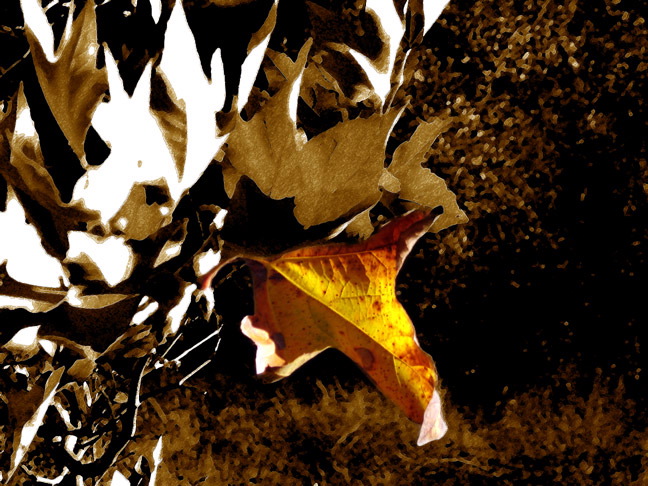
The largest black darkling beetle didn't bother to do a headstand when I neared it on Saturday, a short hike over the ridge, a trail so wet last year it has sprouted a crease of green grass where rainwater made a deep rivulet last spring. The leaves are changing very slowly this year, refusing to die. One sycamore had a single yellow leaf; all the rest remained green. So I killed them in that photograph.
Dusk wells up nostalgia; nostalgia, that false sense of a glistening past: the cool air and clouds of soft gray wool, the occasional puddle and all the fallen leaves swept off driveways into the street; strings of plastic pumpkin lights instead of carved jack-o-lanterns; I'm unfamiliar yet reminded, and some bluish patches beyond the cloudy sky have tiny stars still there from before, and every day they move. I don't like the shadows cast by street lights; or maybe I do. I just don't like the lamps themselves. Cars go by, one after another, but I think people are only going through the motions of running errands; nothing they need is all that immediate. They could walk, too.
And I would like to walk at this time of night more often, but this time of night will never come again. Every moment presents the next ridge of an ever unfolding fan; the view back is equally obscured by such creases, making memory equivocal, the past subjective and only unyeilding in its ambiguity. I wonder if to walk at night on this sad hillside 50 years ago made any sense at all. Where would one walk to? How many sheep would bleat as one passed? Did the birds then, confused as they are now, cry out to each other checking the time? Verifying day from night was easier, maybe; this was a pasture, and I don't know the old geography. I suppose the fog had meaning. A drunken ranch hand would know its significance; he couldn't drive back from the town on the oceanside; he would have to sleep it off in his truck. At this hour, the taverns over by the beach channeled all the revelers and tired laborers up and down a solitary highway; the paths out here had yet to be paved.
Anyway, I wasn't around.
From the "what the __?" file, a report that throws a little bleach onto the dark infection that is Wal-Mart. What sounds at first like enlightened corporate positioning leaves the almondy aftertaste of cynical marketing; otherwise why would we need to know? One would hope that civic responsibility comes with the territory of owning 10 percent of the retail market and controlling 2 percent of the American GDP. But that's the whole thing: being civil has never been profitable. Squashing small-town life and using cheap foreign labor to subvert all competition is the way to "win." Only the threat of lawsuits and visible protest compels the behemoth to shift. Because people who shop at Wal-Mart aren't worried about where things come from--they're worried about how much things cost and how many more things they can buy--the Davids in this Bibilical myth are competitive small business owners, eco-conscious rabble rousers and unionized hippies. We're gonna sell organic cotton shirts at Sam's Club. That should shut them up.
But you still shouldn't shop there. Check out Patagonia. Or other companies not trying to rule the world.
When the early autumn puddles dried here in southern California I remembered the calls for action to the U.S. Army Corps of Engineers after the levees broke seven weeks ago in the other LA. Katrina even got the attention of those citizens previously (seemingly) inoculated to the facts: that gobs of money, for some reason, had flowed middle-eastward, clear across the globe, instead of toward an American community many suits had predicted would need it most if a natural disaster were to strike on target. It struck, and the cash that had not been spent helped create one big soggy septic tank of mankind meets destiny in the Big Easy.
In the Big Messy, meanwhile, since that's where the money--if not the water--has flowed, flooding is taking place on purpose. And, coincidentally, the ACE is in charge. This could be the bayou of southern Louisiana and the mouth of the Mississippi, but we have a city there, and people don't want to live in reed houses in America, much. It's ironic that what leads our politicians to feel umbrage at Saddam's ecological foibles does not extend to our own proclivity to channel nature as we see fit. Although the development of the largest river in North America began centuries ago, even a massive overflow of its banks a dozen years back didn't get the attention of civic planners south of St. Louis. If it did, it didn't extend to the federal level enough to raise the bar in those lower level river states to move people out of harm's way. So here we go again, rebuilding after the floods, draining water that, after all, is supposed to be there, and putting people on "dry" ground that doesn't stay that way. Maybe the Iraqis should count themselves lucky we dislike their former leader so much that we're doing the right thing.
Between the thunder overhead and the rain popping off the balcony, drowning potted plants and the minor earthquake almost masked by my perpetually stomping (downstairs) neighbors, it might be easy to forget that I left town for nearly three weeks and have only recently returned. It may be time for a mid-life crisis and a permanent departure from this uncivilized and insouciant place where every time lightning flickers, teenaged girls scream as if they're watching fireworks. Resting after a long weekend of city living is impossible. Smack! It would be domestic violence if I knew them, but since I don't, I can only be accused of hateful thoughts and unrequited loathing.
Human intrusions of an unnatural nature in conflict with the weather or the earth's machinations bring out the best of my bilious loner persona. When at Yellowstone awaiting Old Faithful to gradually wind up and erupt, the crowd could not sit still; some parents contained their children, most let them run loose between the cold mock-wooden plastic benches untethered, unfettered, undisciplined. Older folks, and national park visitors are mostly older folks and German tourists, spoke loudly of the days when they could still hear. And cell phones rang and car horns bleated like the elk on the other side of the caldera; competed with the crows that cawed in echoic condemnation of our being there at all.

The kids--bored, waiting for the production to begin, for the crowning event and the whole purpose of coming to this bizarre place--could not sit still. I could, and so reduced to solitary middle-aged crank, did my best to fuss with camera, distract myself with alternating thoughts of self-annihalation and mass homicide until, after a couple practice belches, the geyser lifted out of its sulphuric pit with a soft hiss and, because the sun had set and twilight had settled over us, evaporated into a steam cloud before it could rise as high as I think it can get, for roughly 20 seconds silenced the crowd by being unexpectedly benign and imperfect; not the awe-inspiring icon documented on postage stamps and PBS documentaries, but a quiet moment of the Earth sighing, and I along with it, as everyone packed up and left, drove away to go to their hotels to turn on the TV. I remained behind a moment to pay my respects.
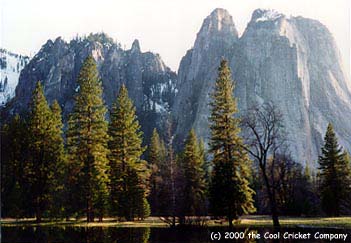 I missed the expanse before it collapsed, and in my 4,200-mile round trips, I find the historical wonder of old prophets corrupted: The flow of rivers through the plains altered beyond Whitman's recognition; the shapes of forests, even their makeup, long changed since Powell explored the great West; lands fenced in, squared off, gutted and culled. Every year the main street of small towns gets to look more like the one I passed through 800 miles back, billboards like shutters and bright corporate logos behind them. All that was once wild--even with man upon it--for unimaginable millennia, is gone. A square of national park is not wilderness. It is tourist haven. I'm glad for these spaces, but they are sad reminders of what is forever lost.
And John Muir would not call "wilderness" the U-shaped valleys filled with homes that took two minutes to erect; he advertised the furthest rim of the Great Basin, the Range of Light, saved it in an exponential leap of conservationist faith. But in doing so he made all else seem second-rate and therefore exploitable. I love the slick gray California ridgeline, the steep peeks that alternate between smooth glass and broken shards. The sun cannot imitate itself, and every day there is some new shadow, some new pathway for the light to follow. Last winter saw a lot more weather than usual; even in May the white wooly coat of so many storms had barely tattered on the Sierra's back. The summer was hot, very, and so autumn gives us golden aspens and glowing foothills, with their steep stony overseers bald of snow looking frankly dark and satisfied with power. These mountains are impossible not to respect and beatify. Their scale and sheer intimidation invite allusions to old myth, while relatively new legends of exploitation (Gold! and Timber!) have become intrinsic to our culture. Mountainsides remain in the form of protected federal land, long ago picked over for their minerals and subsurface resources. The ancient cathedral forests of the Shoshone and Washoe disappeared in a few short mining years; the giant woods of the Lake Tahoe basin exist as logs in underground, abandoned Nevada silver mines. Now sticks of lodgepole pines, a poor replacement, give people the illusion of nature when, in fact, what we have sesquicentennially is a substitute, weed trees that took advantage of the scoured landscape.
We have to call some place home. I feel like a guest still, after 15 years of living here in California. But I feel like a guest everywhere else as well. I think we are all guests of a kind; some of us have the decency to leave the room clean when we leave. Some of us steal towels and tear up the sheets. Earth as bedraggled hotel. Needs a few billionaire investors for a facelift. Will never be the place it was, but we could at least return its dignity.

 In northeast New Mexico, as some of you know, there are several old volcano cones, but only one has trees; that is Capulin, which last erupted about 30,000 years ago (if I remember what the video said in the visitors center). For $5 you can drive up around the cone and then follow two or three trails, one that leads into the caldera, long inactive, another around the rim.
 I park, after some hesitation, twenty miles west of that artificial megalopolis, a street hyper-urbanized for its appeal to sin-seeking tourists (and not, as defenders claim, to clean, green living).
 they could chase around on the rocks and score pictures of fauna and flora into the desert varnish without the consequences of a misdemeanor charge or my irrelevant frown. But the prehistoric marks of man yield less fascination than the geological casualties I find: fallen pieces of uplift collected at the bottom of the cliff like soldiers thrown off a battlement, their contusions caused by eroded iron ore collected within the sandstone.
 This place doesn't belong to me, anyway, not in the least. I continue on, and the trail, I think, disappears into a disarray of stones, none of which match, like a drawer full of buttons. I scrabble at my own pace and make it into a ravine of sorts, where I'm sure once or twice a year a good flash flood wells up and pours through like a jungle river. I see evidence of horrific torrents in the twisted cactus roots exposed, the way everything seems upside down and forced against will into an aggregate dump.
 The weather is the same there as everywhere else, lately, and the lawns have sinned against suburbia by turning yellow. The flowers in the garden struggle despite the hose, and even hornets haven't the energy to sting. Corn stalks remain stunted like withered bamboo bonsai, and the blood-red sun, when it sets, sits huge on the horizon for an hour, as if the earth is so dry it cannot sink.


